

Southern Shepherd's Purse
Southern Shepherd's PurseBallantinia antipoda | |
|---|---|
| Kingdom: | Plantae |
| Division: | Magnoliophyta (Angiosperm) |
| Class: | Magnoliopsida (Dicotyledon) |
| Order: | Capparales |
| Family: | Brassicaceae |
| Status | |
| Australia: | Endangered (EPBC Act 1999) - 16 July 2000 |
| Victoria: | Critically endangered (FFG Threatened List 2025) |
| Tasmania: | Presumed extinct (Tasmanian Threatened Species Protection Act 1995) |
| Profiles | |
| Victoria: | FFG Action Statement June 2025 |
| Australia: | Species profile and threats database |
| Australia | Atlas of Living Australia |
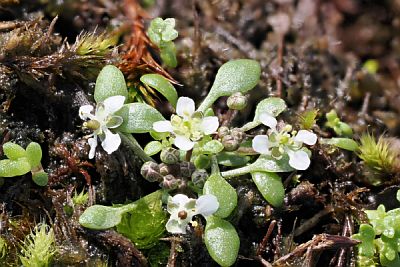
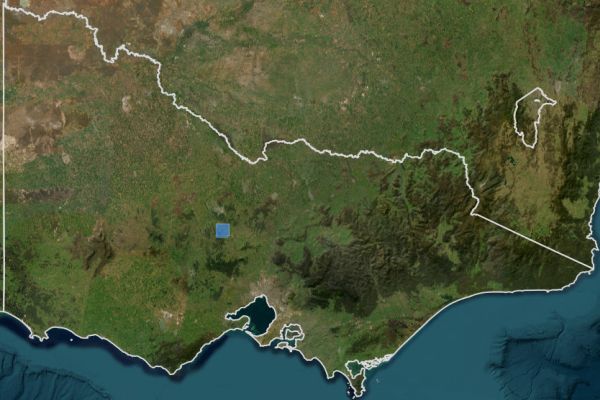
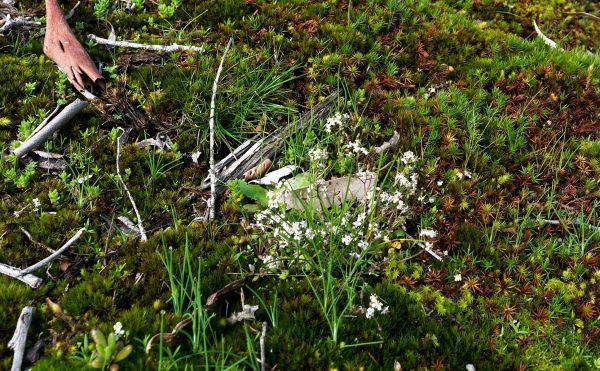
Southern Shepherd's Purse (Ballantinia antipoda) is a Critically endangered native herb that has become extinct at many locations in Victoria. It is now only found in one location where it grows in association with moss mats on granite outcrops at high elevations at Mount Alexander Regional Park/Leanganook.
.
Description
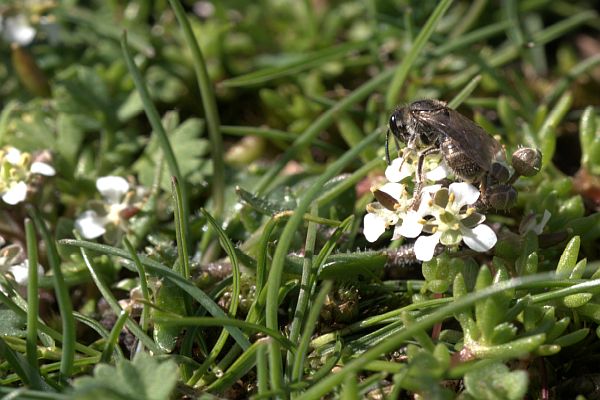
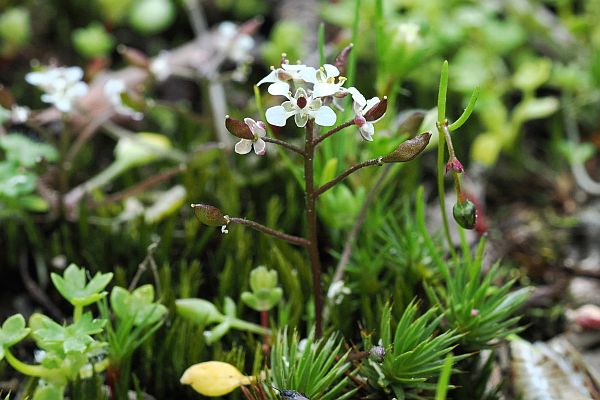
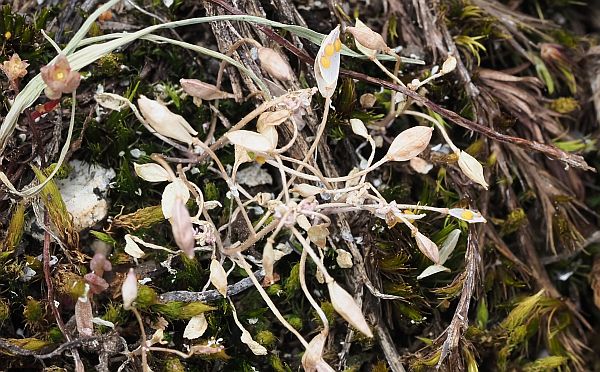
Southern Shepherds Purse is a tiny annual herb with flower stems to 5cm tall which arise from a rosette of stalked, spoon-shaped leaves to 10cm that are often divided into three parts. The small flowers with 4 white petals are only 4 mm in diameter and develop into small elliptical fruits 3–5mm long, Seeds are ellipsoidal and compressed, 1 mm long. (For full description see; Flora of Australia and Flora of Victoria).
Distribution
At the time of colonisation, Ballantinia antipoda was likely fairly common, but quickly disappeared from most of its range following the introduction of sheep.
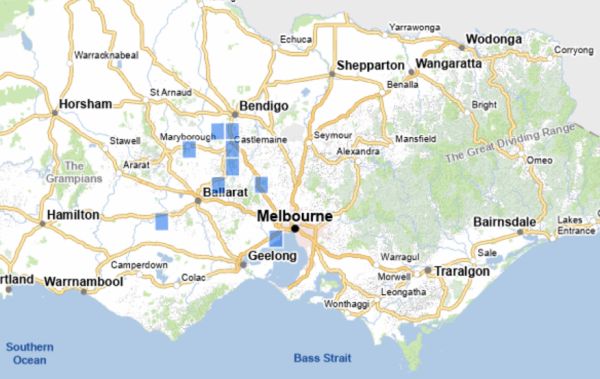
Records of Southern Shepherd’s Purse in Victoria date back to colonisation in the late 1700’s when it was first identified by the National Herbarium on low granite hills at Mt Emu, near Skipton and at Mt Macedon, Maryborough and Mount Alexander areas. In 1866 it was recorded on basalt rocky areas on the volcanic plains near Werribee, 1880 from Daylesford and 1887 from Hepburn Springs. In 1997 and 1999 it was also recorded near Maldon. Between the late 1700’s to 1983 there were many records clustered around the Mount Alexander area but as time passed it become extinct in all but one remaining area at Mount Alexander.
Habitat & Ecology
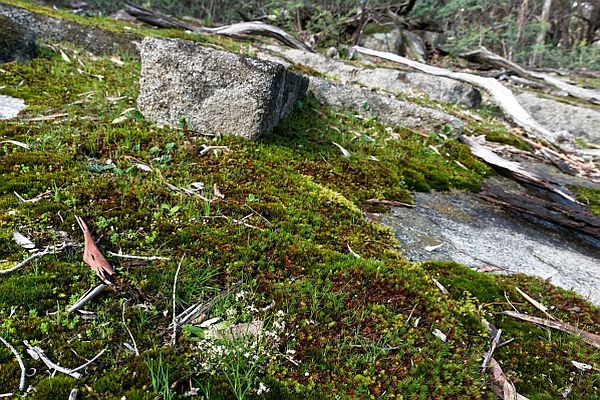
Southern Shepherd’s Purse is found in close association with moss mats. The remaining populations are limited to moist rocky sites on outcropping granite at higher altitudes but historic records indicate the species could have also occurred at low altitudes on the basalt plains.
Reproduction
Southern Shepherd’s Purse is an annual herb. It is in full flower by mid to late September, dying off as the moss mats dry out in late spring. Seeds germinate in winter. The length of flowering is dependent on prevailing weather conditions, with flowering being extended in wet conditions (Nevill & Camilleri 2010)
Population Status
In 2010, Southern Shepherds Purse was restricted to ten small populations on Mount Alexander, within the Mount Alexander Regional Park. Population numbers can fluctuate according to seasonal conditions, with 2010 counts indicating total population size at about 7,000 plants. Densities of up to 200 plants per sq m2 have been recorded. (Nevill & Camilleri 2010). Counts in Spring 2025 at 3 remaining sites on Mount Alexander found the population was only estimated to be 4000 plants (Wawrzyczek pers. comm. 2026).
Threats
In recent years the last population of this unique species declined steeply due to weed invasion of the habitat and physical damage caused by feral animals. Inbreeding depression is also likely to be a factor in the species decline. Past translocation attempts have been unsuccessful (Wawrzyczek pers. comm. 2026).
Key threats from National Recovery Plan (2010)
- Climate change
- Fire
- Habitat loss – grazing
- Human disturbance - very sensitive to trampling
- Introduced plants & animals
Conservation & Management
Summary of key management actions
- Ensure fire management activities do not impact on Southern Shepherd’s Purse habitat
- Increase landholder awareness of the species and the impacts of livestock grazing.
- control of introduced plants in priority areas and undertake revegetation with appropriate native species, where required
- control of rabbits in known areas of Southern Shepherd’s Purse habitat
- Protect from grazing by native species, manly Eastern Grey Kangaroo at selected sites
- Protect selected sites from human disturbance such as trampling,
- Survey and monitoring of known sites
Important Local Government Areas in Victoria for future conservation of Southern Shepherd's Purse
- Mount Alexander Shire (existing population in Mount Alexander Regional Park/Leanganook) but potential for reinstatement outside of park .
- Central Goldfields Shire (potential reinstatement at historic sites)
- Corangamite Shire (potential reinstatement at historic sites)
- Hebburn Shire (potential reinstatement at historic sites)
- Macedon Ranges Shire (potential reinstatement at historic sites)
- Wyndham City (potential reinstatement at historic sites)
Projects & Partnerships
Threatened species conservancy - Safeguarding the future of Southern Shepherd's Purse
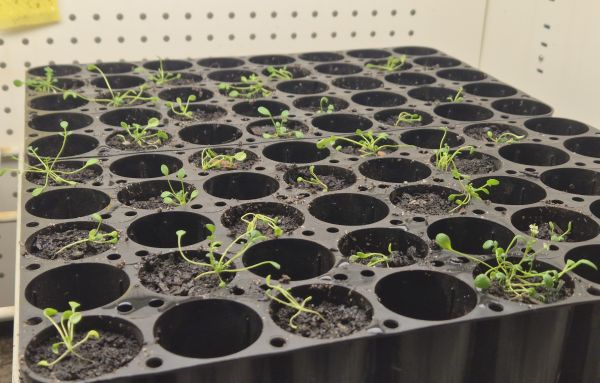
This project is funded by the Australian Government through the Saving Native Species program and has so far established a seed orchard at La Trobe University to produce large amounts of genetically diverse seeds for translocation to establish new populations outside Mt Alexander. Further, the habitat of the remaining wild populations will be protected through weed removal and culling feral animals and community support will be built for sustained conservation action.
More details:
Threatened species conservancy - Safeguarding the future of Southern Shepherd's Purse
References & Links
Australian Government Species profile and threats database
DEECA (2024) Species forecast report Taxon ID: 500359, Strategic Management Prospects v4.0 Species Forecast Report created on 16 July, 2024, Department of Energy, Environment and Climate Action (DEECA), Victoria.
FFG (2025) Action Statement, Southern Shepherds Purse, Department of Energy, Environment and Climate Action (DEECA), Victoria.
FFG (2025) Flora and Fauna Guarantee Act 1988 - Threatened List - March 2025 Department of Energy, Environment and Climate Action (DEECA), Victoria.
Flora of Australia: Profile, Southern Shepherds Purse, Accessed March 2026.
Flora of Victoria: Southern Shepherd's Purse, Accessed March 2026.
Nevill & Camilleri (2010) National Recovery Plan for Southern Shepherd’s Purse Ballantinia antipoda, Department of Sustainability and Environment (DSE 2010), Australian Government - Department of Climate Change, Energy, the Environment and Water (DCCEW).
VBA (2026) Victorian Biodiversity Atlas, Department of Energy, Environment and Climate Action (DEECA), Victoria.
VVB (2026) Visualising Victoria's Biodiversity map portal.
Wawrzyczek Pers. comm. (2026) Stan Wawrzyczek, Threatened Species Conservancy.
Southern Shepherd’s Purse Ballantinia antipoda is a distinctly different plant to the Critically endangered Hairy Shepherd’s Purse Microlepidium pilosusm and the more common widespread and introduced Shepherd’s Purse Capsella bursa-pastoris. Although each features the common name Shepherd’s Purse they have a distinctly different genera and also grow in different habitats.
More Information
Threatened species conservancy - Safeguarding the future of Southern Shepherd's Purse